

Biological Crop Protection Market In 2029
Biological Crop Protection Market Report Size
Biological Crop Protection Market Report Share

Biological Crop Protection Market Report Growth
The Business Research Company's Biological Crop Protection Global Market Report 2026 – Market Size, Trends, And Global Forecast 2026-2035
LONDON, GREATER LONDON, UNITED KINGDOM, January 9, 2026 /EINPresswire.com/ -- "Biological Crop Protection Market to Surpass $10 billion in 2029. In comparison, the Crop Protection Chemicals which is considered as its parent market, is expected to be approximately $100 billion by 2029, with Biological Crop Protection market to represent around 10% of the parent market. Within the broader Chemicals industry, which is expected to be $7,043 billion by 2029, the Biological Crop Protection market is estimated to account for nearly 0.1% of the total market value.
Which Will Be the Biggest Region in the Biological Crop Protection Market in 2029
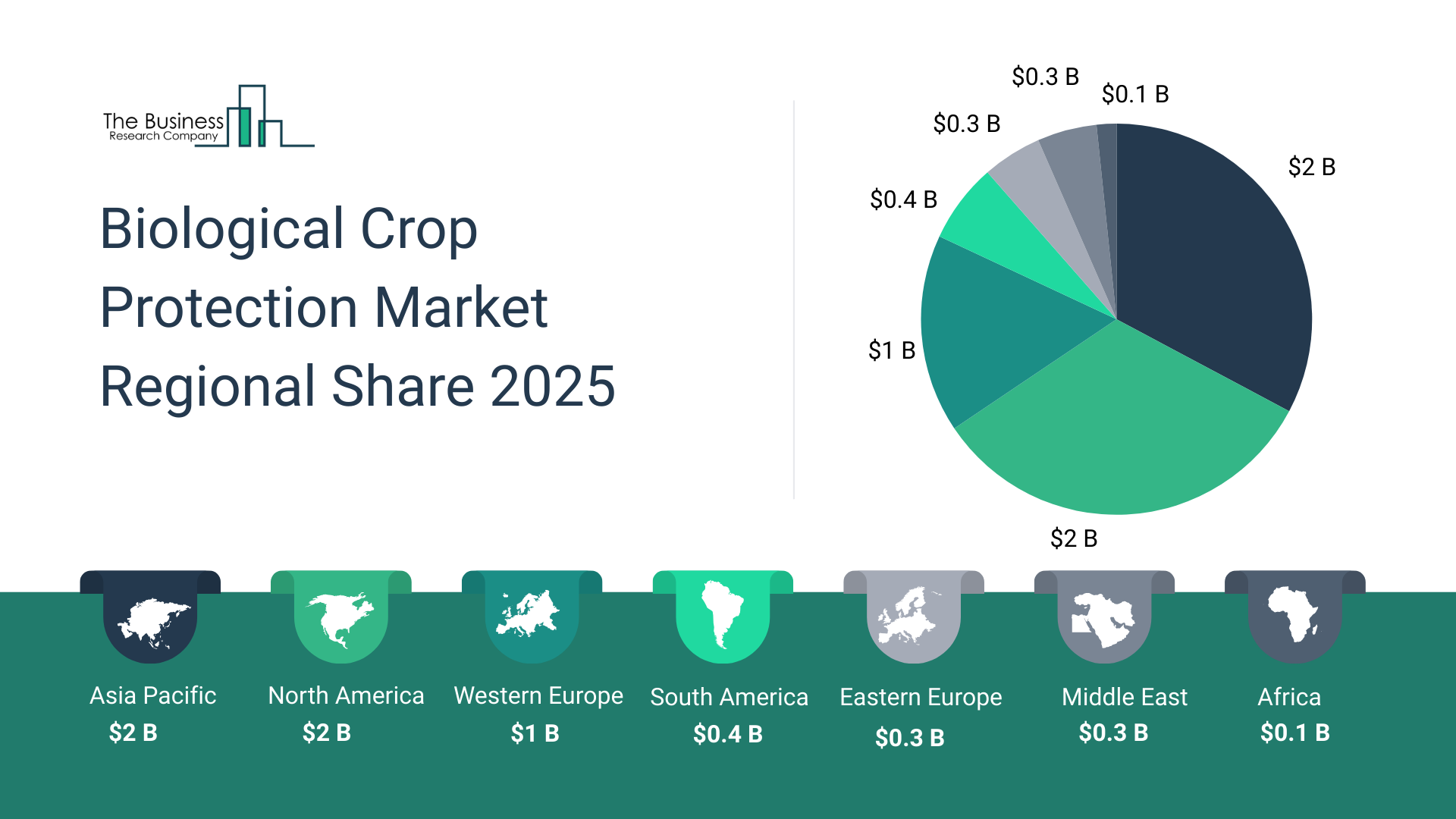
Asia-Pacific will be the largest region in the biological crop protection market in 2029, valued at $3,684 million. The market is expected to grow from $1,893 million in 2024 at a compound annual growth rate (CAGR) of 14%. The rapid growth in the forecast period can be attributed to the increasing demand for resilient and climate-adaptive biological solutions and growing consumer demand for organic and sustainable food.
Which Will Be The Largest Country In The Biological Crop Protection Market In 2029?
USA will be the largest country in the biological crop protection market in 2029, valued at $2,493 million. The market is expected to grow from $1,482 million in 2024 at a compound annual growth rate (CAGR) of 11%. The rapid growth in the forecast period can be attributed to the rising awareness of sustainable farming practices and mergers and acquisitions.
Request a free sample of the Biological Crop Protection Market report:
https://www.thebusinessresearchcompany.com/sample_request?id=18974&type=smp
What will be Largest Segment in the Biological Crop Protection Market in 2029?
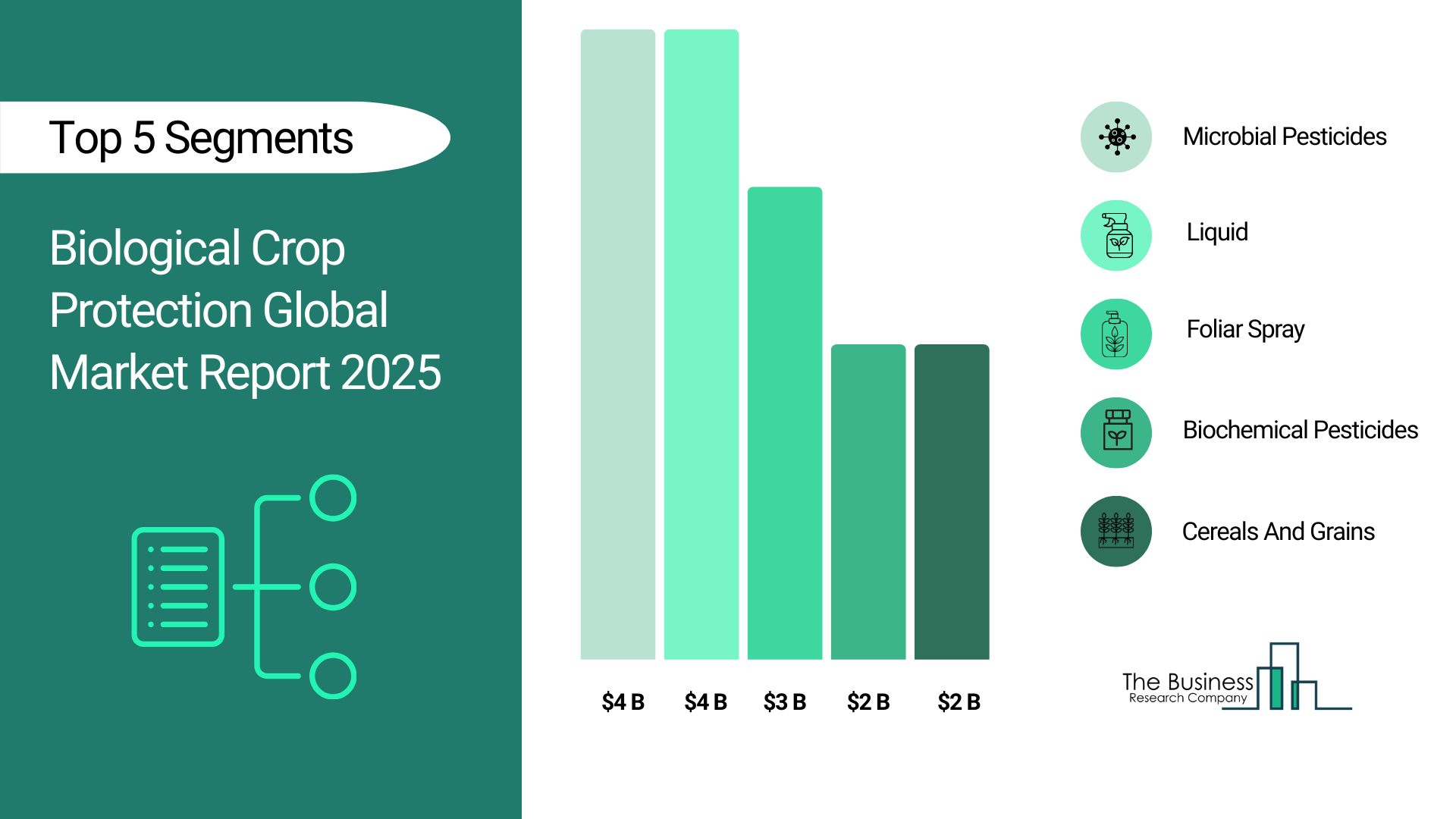
The biological crop protection market is by product type into microbial pesticides, plant-incorporated protectants, and biochemical pesticides. The microbial pesticides market will be the largest segment of the biological crop protection market segmented by product type, accounting for 59% or $5,907 million of the total in 2029. The microbial pesticides market will be supported by increasing regulatory encouragement for low-residue solutions, strong demand from organic and specialty-crop growers, advancements in strain selection and formulation that improve efficacy and consistency, growing evidence of crop-yield and pest-suppression benefits, improving shelf-life and storage technologies, and expanded distribution channels and farmer training programs that increase adoption.
The biological crop protection market is segmented by crop type into cereals and grains, oilseeds and pulses, fruits and vegetables and other crop types. The fruits and vegetables market will be the largest segment of the biological crop protection market segmented by crop type, accounting for 40% or $4,037 million of the total in 2029. The fruits and vegetables market will be supported by high consumer sensitivity to pesticide residues and an expanding organic/short-supply-chain market, frequent and specific pest pressures that favour targeted biological solutions, intensive cropping systems that allow repeated applications and monitoring, close relationships between growers and advisors enabling quicker uptake, and retailer-driven quality standards that reward residue-reduction strategies.
The biological crop protection market is segmented by formulation into liquid and dry. The liquid market will be the largest segment of the biological crop protection market segmented by formulation, accounting for 68% or $6,782 million of the total in 2029. The liquid market will be supported by ease of tank-mixing and mechanized application, rapid uptake and immediate activity for certain actives, compatibility with existing spray equipment and fertigation systems, ability to include adjuvants and stabilizers to improve field performance, scalable manufacturing and lower upfront formulation cost, and strong acceptance among large-scale growers for convenience and application control.
The biological crop protection market is segmented by application into foliar spray, seed treatment, soil treatment, and post-harvest. The foliar spray market will be the largest segment of the biological crop protection market segmented by application, accounting for 54% or $5,388 million of the total in 2029. The foliar spray market will be established spray infrastructure on farms enabling rapid adoption, formulations optimized for canopy coverage and fast pest contact, ability to target outbreaks quickly and reduce crop losses, compatibility with monitoring and decision-support tools for precise timing, broad registration pathways for foliar use in many regions, and proven improvements in visible crop health and marketable yield.
What is the expected CAGR for the Biological Crop Protection Market leading up to 2029?
The expected CAGR for the biological crop protection market leading up to 2029 is 12%.
What Will Be The Growth Driving Factors In The Biological Crop Protection Market In The Forecast Period?
The rapid growth of the global biological crop protection market leading up to 2029 will be driven by the following key factors that are expected to reshape agricultural production, sustainability compliance, and farm-level crop protection practices worldwide.
Growing Consumer Demand For Organic And Sustainable Food- The growing consumer demand for organic and sustainable food will become a key driver of growth in the biological crop protection market by 2029. Organic and sustainable food refers to products grown and produced using environmentally friendly methods that avoid synthetic chemicals, promote biodiversity, and support long-term ecological and human health. Consumer demand for organic and sustainable food is rising as more people seek healthier diets free from synthetic pesticides and chemical residues. Biological crop protection uses naturally derived solutions such as beneficial microbes, plant extracts, and pheromones to manage pests and diseases in a safe and eco-friendly way, reducing dependence on synthetic chemicals. This approach supports organic and sustainable food production by maintaining soil fertility, protecting biodiversity, minimizing chemical residues, and promoting healthier, more environmentally responsible farming practices. As a result, the growing consumer demand for organic and sustainable food is anticipated to contributing to a 2.0% annual growth in the market.
Governmental Support And Subsidies For Improved Crop Yields- The governmental support and subsidies for improved crop yields will emerge as a major factor driving the expansion of the biological crop protection market by 2029. Such support reduces costs and makes these products more competitive compared to conventional pesticides, encouraging wider usage among farmers. Governments are increasingly providing support to ensure food security, tackle climate change challenges, and promote sustainable agricultural practices, while also motivating farmers to adopt modern technologies that enhance productivity and efficiency. These subsidies and incentives make biological crop protection more affordable, foster the adoption of eco-friendly alternatives to synthetic pesticides, and can fund research, training, and awareness programs that boost the effectiveness, acceptance, and overall sustainability of biological solutions. Consequently, the governmental support and subsidies for improved crop yields is projected to contributing to a 1.5% annual growth in the market.
Rising Awareness Of Sustainable Farming Practices-The rising awareness of sustainable farming practices as a major factor driving the expansion of the biological crop protection market by 2029. Sustainable farming practices involve agricultural methods that fulfill present food and fiber requirements without compromising the ability of future generations to meet their needs. These practices focus on preserving or enhancing soil health, conserving water, minimizing chemical inputs, protecting biodiversity, reducing environmental impact, and ensuring economic and social sustainability for farmers. Promoting awareness of sustainable farming supports biological crop protection by encouraging the use of eco-friendly pest management approaches, such as beneficial insects, bio-pesticides, and crop rotation, rather than conventional synthetic chemicals. Consequently, rising awareness of sustainable farming practices is projected to contributing to a 1.0% annual growth in the market.
Increasing Demand For Resilient And Climate-Adaptive Biological Solutions- The increasing demand for resilient and climate-adaptive biological solutions will emerge as a major factor driving the expansion of the biological crop protection market by 2029. These solutions support biological crop protection by helping crops endure environmental stresses and shifting pest patterns, ensuring effective and sustainable pest management even under challenging climatic conditions. Demand is increasing as climate change leads to more frequent extreme weather events, unpredictable pest outbreaks, and fluctuating growing conditions that threaten crop yields. Climate-adaptive solutions are particularly valuable because they enable crops to withstand and recover from climate-related challenges such as extreme temperatures, irregular rainfall, and heightened pest and disease pressure. By employing microorganisms, bio-pesticides, and other eco-friendly agents designed to perform under diverse environmental conditions, these solutions help maintain plant health and productivity. Consequently, the increasing demand for resilient and climate-adaptive biological solutions are projected to contributing to a 0.5% annual growth in the market.
Access the detailed Biological Crop Protection Market report here:
https://www.thebusinessresearchcompany.com/report/biological-crop-protection-global-market-report
What Are The Key Growth Opportunities In The Biological Crop Protection Market in 2029?
The most significant growth opportunities are anticipated in liquid biological crop protection market, biological and microbial crop protection market, biological foliar crop protection market, and biological crop protection for fruits and vegetables market. Collectively, these segments are projected to contribute over $10 billion in market value by 2029, driven by rising demand for low-residue and sustainable crop protection solutions, accelerated regulatory support for biologicals, and rapid advancements in microbial and botanical formulations. This momentum is further strengthened by increasing pest resistance to chemical pesticides, expanding adoption of integrated pest management (IPM), and the growing shift toward climate-resilient, eco-friendly farming practices. Together, these factors are reshaping global agricultural production systems and fuelling transformative growth within the broader biological crop protection industry.
The liquid biological crop protection market is projected to grow by $3,083 million, the biological and microbial crop protection market by $2,767 million, the biological foliar crop protection market by $2,509 million, and the biological crop protection for fruits and vegetables market by $2,079 million over the next five years from 2024 to 2029.
The Business Research Company (www.thebusinessresearchcompany.com) is a leading market intelligence firm renowned for its expertise in company, market, and consumer research. We have published over 17,500 reports across 27 industries and 60+ geographies. Our research is powered by 1,500,000 datasets, extensive secondary research, and exclusive insights from interviews with industry leaders.
We provide continuous and custom research services, offering a range of specialized packages tailored to your needs, including Market Entry Research Package, Competitor Tracking Package, Supplier & Distributor Package and much more
Disclaimer: Please note that the findings, conclusions and recommendations that TBRC Business Research Pvt Ltd delivers are based on information gathered in good faith from both primary and secondary sources, whose accuracy we are not always in a position to guarantee. As such TBRC Business Research Pvt Ltd can accept no liability whatever for actions taken based on any information that may subsequently prove to be incorrect. Analysis and findings included in TBRC reports and presentations are our estimates, opinions and are not intended as statements of fact or investment guidance.
The Business Research Company
Americas +1 310-496-7795
Europe +44 7882 955267
Asia & Others +44 7882 955267 & +91 8897263534
Email: info@tbrc.info"
Oliver Guirdham
The Business Research Company
+44 7882 955267
info@tbrc.info
Visit us on social media:
LinkedIn
Facebook
X
Legal Disclaimer:
EIN Presswire provides this news content "as is" without warranty of any kind. We do not accept any responsibility or liability for the accuracy, content, images, videos, licenses, completeness, legality, or reliability of the information contained in this article. If you have any complaints or copyright issues related to this article, kindly contact the author above.
