
Following the news from Europe
Provided by AGP
GPT Image 2 Vs Nano Banana 2: A Practical Guide for Choosing the Right AI Image Model
GPT Image 2 Vs Nano Banana 2 Comparison Hero
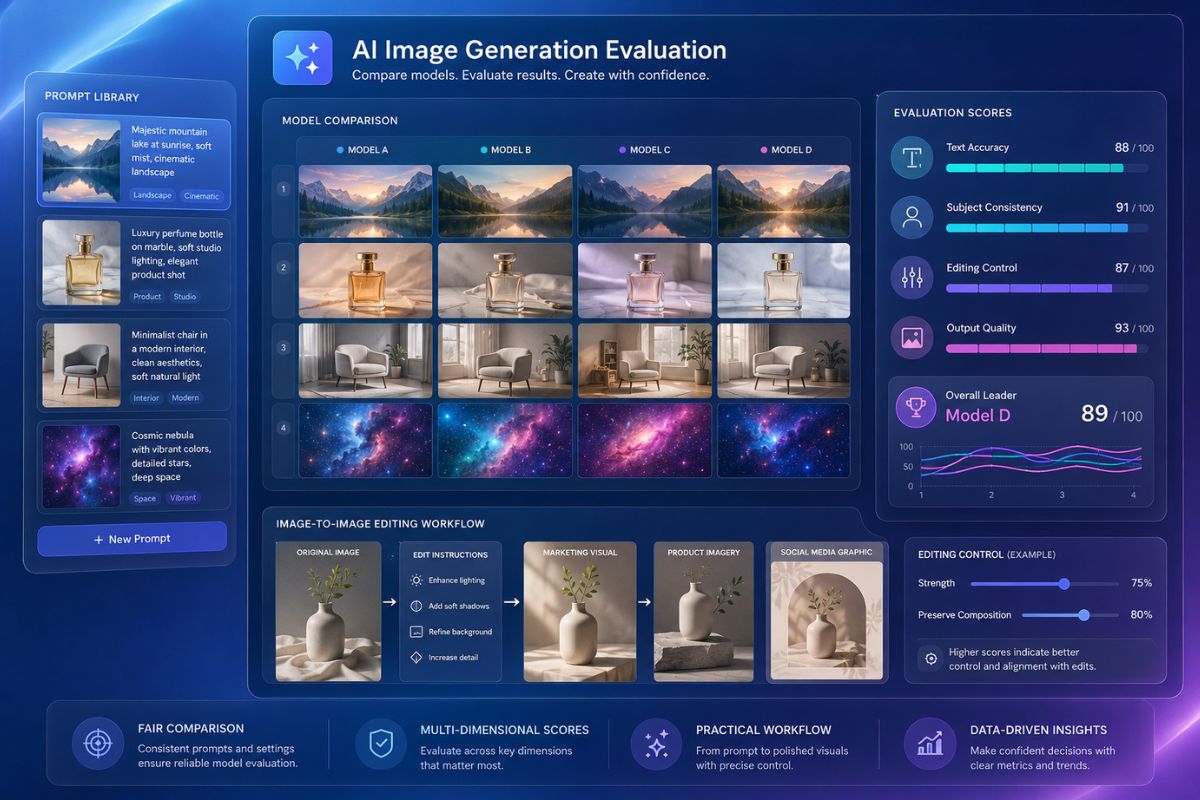
AI Image Generator Workflow Evaluation
A guide-style analysis for creators, marketers, and product teams comparing two major image generation and editing workflows.
SHERIDAN, WY, UNITED STATES, May 6, 2026 /EINPresswire.com/ -- As AI image tools move from experimentation into everyday creative production, the comparison between GPT Image 2 and Nano Banana 2 has become more practical than theoretical. Both models are designed for visual creation, image editing, and prompt-based workflows, but they are not necessarily built for the same kind of user, production environment, or creative goal.This guide explains how to compare GPT Image 2 vs Nano Banana 2 in a useful way. Instead of asking which model is “better” in a general sense, it looks at where each model may fit inside real creative work: marketing visuals, product images, social content, design drafts, image editing, character consistency, and high-volume content production.
OpenAI describes GPT Image 2 as a state-of-the-art image generation model that supports text and image inputs, with image output, flexible image sizes, and high-quality image generation and editing. Google describes Nano Banana 2 as its latest image generation model, emphasizing speed, subject consistency, production-ready specs, improved instruction following, and rollout across products including Gemini, Search, and Ads.
1. Why GPT Image 2 Vs Nano Banana 2 Matters Now
The comparison matters because image generation is no longer used only for fun prompts or concept art. Teams now use AI-generated visuals for campaign ideation, website graphics, ecommerce assets, social posts, thumbnails, storyboards, and brand experiments.
That shift changes the selection criteria. A good image model is not only judged by whether it can create a beautiful picture. It also needs to answer practical questions:
Can it follow detailed instructions?
Can it edit an existing image without breaking the original structure?
Can it render readable text inside an image?
Can it preserve a character, product, or brand style across multiple attempts?
Can it create enough options quickly for real production work?
Can the workflow support responsible publishing?
For teams comparing GPT Image 2 and Nano Banana 2, the best choice depends on the job. A brand designer may prioritize typography and layout control. A social media team may prioritize fast variations. An ecommerce operator may need consistent product presentation. A creator may care more about style flexibility and image-to-image exploration.
2. What GPT Image 2 Is Best Understood As
GPT Image 2 is best understood as a high-control image generation and editing model for users who need polished visual outputs, stronger instruction following, and production-oriented image quality.
OpenAI’s image generation guide states that GPT Image models can generate images from text prompts and edit existing images based on new prompts. It also notes that the API allows customization of output through quality, size, format, and compression settings. OpenAI’s prompting guide positions its gpt-image models around production-quality visuals, controllable workflows, photorealism, identity preservation, and reliable text rendering.
In practical terms, GPT Image 2 may be especially relevant for:
marketing campaign visuals
editorial-style images
product concept images
website hero graphics
social ad creatives
character or identity-based image editing
poster-style visuals with text
polished image variants based on a clear brief
The strongest use case is not just “make an image.” It is more like “turn a clear creative brief into a usable visual asset.”
3. What Nano Banana 2 Is Best Understood As
Nano Banana 2 is best understood as a fast, flexible Google image generation and editing model built around speed, scale, multimodal grounding, and broad creative access.
Google introduced Nano Banana 2 as Gemini 3.1 Flash Image, describing it as a model for high-fidelity image generation, faster advanced editing, improved world knowledge, and strong price-performance for developers using Google AI Studio or the Gemini API. Google also highlights capabilities such as subject consistency, precise instruction following, production-ready specs, and improved AI image identification through SynthID and C2PA Content Credentials.
Nano Banana 2 may be especially relevant for:
rapid creative variation
large-scale image generation
social media asset production
localized image content
lightweight product or lifestyle edits
fast visual drafts
developer workflows using Gemini tools
campaigns that need many image options quickly
The strongest use case is speed plus range. It is a model for teams that want to test, edit, and ship many visuals without slowing down the creative pipeline.
4. The Right Comparison Is Workflow-Based, Not Hype-Based
A practical GPT Image 2 vs Nano Banana 2 comparison should begin with workflow, not brand names.
For teams choosing an AI image generator, the better question is: what kind of visual task needs to be repeated every week?
A model that performs well for one-off artistic prompts may not be the best model for ecommerce variants. A model that creates fast drafts may not always be the strongest choice for typography-heavy campaign graphics. A model that handles precise edits well may become more valuable than a faster model when the final output must match brand guidelines.
A useful comparison can be built around five real-world dimensions:
prompt accuracy
editing control
text and layout quality
identity or subject consistency
production speed
This keeps the evaluation grounded. It also prevents the article or press release from sounding like a ranking based on vague claims.
5. Prompt Following and Creative Control
Prompt following is one of the most important areas in the GPT Image 2 vs Nano Banana 2 discussion.
For GPT Image 2, the key advantage is likely to be detailed instruction handling. It is designed for users who give specific creative direction: subject, style, composition, camera angle, lighting, mood, text placement, and output format. This makes it a strong candidate for briefs that need visual precision.
For Nano Banana 2, the key advantage is fast interpretation and iteration. Google highlights precise instruction following and creative control, while also emphasizing Flash-speed generation and rapid editing. This can be valuable when the creative process involves trying many directions before choosing the strongest one.
A practical test should include prompts with:
multiple subjects
specific object placement
clear style instructions
lighting direction
composition constraints
output format requirements
negative constraints, such as “no extra text” or “no distorted hands”
The winning model is not the one that produces the most dramatic image. It is the one that follows the brief with the least correction.
6. Text Rendering and Layout Quality
Text rendering is a major decision factor for marketers and designers.
Many AI image tools can create attractive visuals, but not all can reliably produce clean, readable text inside the image. This matters for posters, thumbnails, menu graphics, product labels, app mockups, educational graphics, and promotional banners.
OpenAI’s prompting guide highlights reliable text rendering with crisp lettering, consistent layout, and strong contrast as a key capability of its gpt-image models. Google also says Nano Banana 2 improves text rendering and localization, which is important for dynamic UI generators and creative tools.
For a fair test, teams should not only test one short word. They should test:
a product label
a short poster headline
a simple menu board
a social media quote card
a multilingual phrase
a mock ad layout
a UI-style image with small text
The key question is not whether text appears. The key question is whether the text is usable without manual repair.
7. Image Editing and Image-To-Image Workflows
Image editing is where model comparison becomes more practical.
Text-to-image generation is useful for first drafts, but many production workflows begin with an existing image. A team may need to change the background, adjust clothing, update a product scene, apply a new style, preserve a character, or create a variation from a reference image.
That is where image to image workflows matter. They reduce the gap between an idea and a usable asset because the original visual structure is already present.
GPT Image 2 may fit teams that need stronger preservation of identity, object structure, and edited detail. Nano Banana 2 may fit teams that need faster edits and broader variation testing. The right choice depends on whether the task is precision editing or fast exploration.
A useful editing test should include:
changing the background while keeping the subject stable
changing clothing while keeping pose and face consistent
converting a product photo into a campaign-style image
turning a sketch into a polished visual
applying a new style while preserving layout
making small local edits without changing the entire image
For production teams, the best editing model is the one that changes only what should change.
8. Brand Consistency and Subject Consistency
Brand consistency is often more valuable than one beautiful result.
A model that creates one impressive image but cannot repeat the same product, character, color palette, or layout direction may create extra work for the team. This is especially important for brands running weekly campaigns, ecommerce stores producing product visuals, and creators building recognizable visual series.
Google specifically highlights subject consistency as one of Nano Banana 2’s capabilities. OpenAI’s prompting guide also highlights robust facial and identity preservation for edits, character consistency, and multi-step workflows.
A practical consistency test should check whether the model can preserve:
the same character face
the same product shape
the same logo-free brand palette
the same clothing style
the same room or background structure
the same camera framing
the same visual tone across a set
For business use, consistency often decides whether AI images can move from “interesting output” to “repeatable production asset.”
9. Speed, Scale, and Iteration
Speed matters, but speed alone is not the whole answer.
Nano Banana 2 is strongly positioned around Flash-speed generation, faster advanced editing, and high price-performance for building image workflows at scale. This makes it attractive for teams that need many versions quickly, such as social media teams, ad testers, and developers building creative tools.
GPT Image 2 may be more appealing when the team prefers fewer but more controlled outputs. In some workflows, one highly accurate image can be more valuable than twenty rough drafts. In other workflows, fast ideation is the main advantage.
A balanced production workflow may use speed differently:
fast drafts for idea exploration
slower high-quality outputs for final assets
batch generation for ad testing
controlled editing for approved campaign visuals
repeated variation testing for thumbnails and social posts
The right model depends on where the team loses the most time. If the bottleneck is ideation, speed matters most. If the bottleneck is correction, control matters more.
10. Safety, Transparency, and Responsible Publishing
AI image generation is now part of public-facing content, so responsible use cannot be treated as an afterthought.
Google has stated that Nano Banana 2 is part of its work on AI image identification, including SynthID and C2PA Content Credentials. OpenAI’s image generation guide also notes that organization verification may be required before using GPT Image models, including gpt-image-2, in the API.
For teams publishing AI-generated visuals, a responsible workflow should include:
using source images with proper rights
avoiding misleading identity edits
keeping records of prompts and source assets
reviewing platform disclosure rules
checking sensitive or regulated use cases
avoiding false product claims in generated images
labeling AI-assisted assets when required
These steps are not only about compliance. They also protect brand trust.
11. A Practical Testing Protocol for GPT Image 2 Vs Nano Banana 2
A fair comparison should use the same creative briefs across both models.
One useful protocol is to create a small set of test prompts and score each model against the same criteria. The test should include both text-to-image and editing tasks.
Recommended test set:
one product photography prompt
one lifestyle marketing prompt
one poster with readable text
one character consistency prompt
one ecommerce background replacement task
one image-to-image style conversion task
one multilingual visual layout
one social media thumbnail concept
Each output can be scored on:
instruction accuracy
visual quality
text accuracy
subject consistency
edit precision
style control
speed of usable result
amount of manual repair needed
The most important metric is not the first output. It is the number of attempts required to reach a usable result.
12. How to Choose Between GPT Image 2 and Nano Banana 2
GPT Image 2 may be the better fit when the project needs detailed creative control, strong editing performance, polished campaign visuals, identity preservation, and high-quality text or layout rendering.
Nano Banana 2 may be the better fit when the project needs fast iteration, large-scale image variation, developer-friendly workflows, quick editing, broad creative exploration, and integration with Google’s Gemini ecosystem.
A simple decision framework looks like this:
Choose GPT Image 2 when:
the image must follow a detailed brand brief
text rendering is important
identity or product consistency matters
fewer but stronger outputs are preferred
final polish is more important than fast volume
editing accuracy matters more than broad variation
Choose Nano Banana 2 when:
the team needs many fast creative options
campaign testing requires volume
the workflow is connected to Gemini tools
fast editing and iteration are important
subject consistency is needed at scale
the team values speed and price-performance
For many creative teams, the answer may not be one model forever. The best workflow may use both: one for rapid exploration and the other for final refinement.
13. Final Takeaway
GPT Image 2 vs Nano Banana 2 is not a simple winner-takes-all comparison. It is a workflow decision.
GPT Image 2 appears strongest for teams that need controlled, polished, production-quality image generation and editing. Nano Banana 2 appears strongest for teams that need fast, scalable, and flexible image creation across a wide range of use cases.
The practical recommendation is to test both models with the same briefs, the same source images, and the same scoring criteria. The better model is the one that produces usable results with less correction, less drift, and less production friction.
For creators, marketers, and product teams, this comparison signals a broader shift in AI image generation. The next stage is not only about making better images. It is about building repeatable visual workflows that can support real publishing, real campaigns, and real creative decisions.
Irwin
MewX LLC
+1 307-533-7137
email us here
Visit us on social media:
LinkedIn
YouTube
X
Legal Disclaimer:
EIN Presswire provides this news content "as is" without warranty of any kind. We do not accept any responsibility or liability for the accuracy, content, images, videos, licenses, completeness, legality, or reliability of the information contained in this article. If you have any complaints or copyright issues related to this article, kindly contact the author above.
